



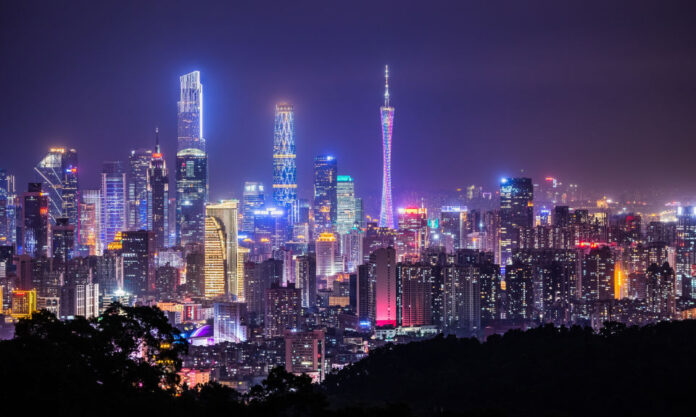

The Qianlong Emperor decreed in 1757 that all Western maritime trade with China would be conducted through a single port, Canton, now Guangzhou; for the next 85 years, one city was, by imperial law, the entirety of China’s legal trade with the West.
一七五七年,乾隆皇帝下令,所有西方海上贸易均须经由广州这一唯一口岸进行;此后八十五年间,依据这道谕旨,这座城市便是清朝对西方合法贸易的全部所在。
Foreign merchants under this arrangement, known as the Canton System, were confined to a narrow strip of riverside warehouses called the Thirteen Factories, forbidden from entering the walled city itself or dealing with anyone except a licensed guild of Chinese merchants, the Cohong, who held a state-sanctioned monopoly on all foreign business. Tea, silk and porcelain flowed out; silver, and eventually opium, flowed in, in a trade so lucrative that the arrangement lasted until Britain went to war over it.
在这套被称为”广州体制”的制度下,外国商人被限制在江边一片仓库区域内,即”十三行”,不得进入城墙以内的区域,也不得与官方特许的中国商人行会”公行”以外的任何人交易,而这一行会,则垄断了所有对外贸易。茶叶、丝绸与瓷器由此运出,白银乃至后来的鸦片则由此流入,这门生意利润丰厚,直至英国为此发动战争,这套安排方才终结。
According to historians who have studied the period, Guangzhou was selected for this role precisely because it had already functioned as a major node on the maritime Silk Road for well over a thousand years by the time Qianlong made the arrangement official; the city’s port had existed in some form since the Qin dynasty founded a settlement here in 214 BC, and it served briefly as the capital of the independent Kingdom of Nanyue less than a century later.
据研究这段历史的学者介绍,乾隆之所以选定广州承担这一角色,正是因为早在这道谕旨正式颁布之前,这座城市已作为海上丝绸之路的重要节点,存在了逾千年之久;早在公元前二一四年秦朝在此立县之时,这座港口便已初具雏形,不到一个世纪后,它还一度成为独立的南越国的都城。
Two Thousand Years of Trade, Interrupted Only Briefly
两千年的贸易史,仅有短暂中断
That continuity is what makes the 1757 decree so striking; it did not create a trading city out of nothing, it simply formalised and narrowed a role Guangzhou had already been playing, on and off, for two millennia. The Canton System ended in 1842, when China’s defeat in the First Opium War forced the Qing court to sign the Treaty of Nanjing, opening Shanghai and four other ports to foreign trade and ending Guangzhou’s legal monopoly for good.
正因如此,一七五七年的这道谕旨才显得格外耐人寻味;它并非凭空造就了一座贸易之城,而只是将广州两千年来断断续续扮演的角色,加以正式化并收窄。一八四二年,清政府在第一次鸦片战争中战败,被迫签订《南京条约》,开放上海等五处通商口岸,广州的法定垄断地位也就此终结。
The city’s trading identity, though, proved harder to end than the law that had enforced it. Since 1957, Guangzhou has hosted the Canton Fair twice a year, now formally called the China Import and Export Fair, which remains the country’s largest trade exhibition and draws hundreds of thousands of buyers and exhibitors from across the world to the same stretch of the Pearl River where the Thirteen Factories once stood.
不过,这座城市的贸易身份,比曾经强制推行它的那道法令,要顽强得多。自一九五七年起,广州每年春秋两季举办中国进出口商品交易会,即”广交会”,至今仍是中国规模最大的贸易展会,吸引着来自世界各地的数十万采购商与参展商,汇聚在当年十三行所在的同一段珠江之畔。
A City Built by Arrivals
一座由迁徙者建成的城市
Guangzhou’s 2020 census recorded a permanent population of 18,676,605, though officials and demographers alike have long acknowledged that a large floating population, migrant workers who live in the city for months at a time without formally registering as residents, means any single figure is only an approximation; some estimates place the wider urban and migrant population closer to 25 million in a typical year.
广州二零二零年人口普查记录常住人口为一千八百六十七万六千六百零五人,不过官方与人口学者均长期承认,这座城市存在大量流动人口——即在此居住数月却未正式落户的外来务工人员——使任何单一数字都只是一种大致估算;部分估算显示,在典型年份,广州的城市实际居住人口与流动人口合计,可能接近两千五百万。
Much of that population lives in what are known as urban villages, dense low-rise neighbourhoods left over from villages the city’s rapid expansion eventually swallowed, where rents remain far lower than in the surrounding high-rises; these districts have become, almost by accident, the entry point for successive waves of migrant labour that built modern Guangzhou’s factories, markets and construction sites.
这些人口中,相当一部分居住在被称作”城中村”的区域,这些低矮密集的社区,是这座城市高速扩张过程中被吞并的原有村落所遗留下来的,租金也远低于周边的高楼大厦;这些区域几乎是无心插柳,却成了一波又一波外来务工者的落脚之地,而正是他们,建起了今日广州的工厂、市场与建筑工地。
Cantonese, rather than Mandarin, remains the everyday language of much of the older city, and dim sum, sold under the local name of yum cha, or drinking tea, originated in the teahouses of this same region; Lingnan cuisine remains one of Guangzhou’s most successful exports, long after tea and porcelain ceased to dominate world trade.
粤语,而非普通话,至今仍是老城区大部分居民的日常用语;而”饮茶”这一习俗,以及广为人知的点心(点心的英文”dim sum”这一名称,正是源自粤语),正是发端于这一带的茶楼之中。岭南饮食文化,至今仍是广州最为成功的”出口产品”之一,即便茶叶与瓷器早已不再主导世界贸易。
An Economy that Still Behaves like a Trading Post
一个至今仍保有贸易口岸气质的经济体
Guangzhou’s GDP reached roughly ¥3.2 trillion in 2025, with per capita output exceeding US$24,000, according to municipal figures, placing it consistently among the top handful of Chinese cities by total output; retail sales of consumer goods alone crossed ¥1.1 trillion in 2024, one of only seven Chinese cities to pass that threshold. The broader Guangdong province, of which Guangzhou is the capital, has held the title of China’s largest provincial economy for 36 consecutive years running.
据市级数据显示,广州二零二五年GDP约达三点二万亿元人民币,人均产值超过二万四千美元,长期稳居中国城市总量前列;仅二零二四年一年,社会消费品零售总额便突破一点一万亿元,是全国仅有的七座跨过这一门槛的城市之一。而广州所在的广东省,已连续三十六年保持中国经济总量第一大省的地位。
Getting around Guangzhou today means navigating one of China’s busiest transport hubs; Baiyun International Airport ranks among the country’s top three airports by passenger volume, Guangzhou South railway station serves as a major terminus on the high-speed network linking the city to Beijing, Shanghai and Hong Kong, and a metro system of more than a dozen lines carries millions of riders daily beneath streets first laid out along trade routes centuries old.
如今在广州出行,意味着要穿梭于中国最繁忙的交通枢纽之一;白云国际机场的客运吞吐量长期位居全国前三,广州南站是连接北京、上海与香港的高铁网络的主要终点站之一,而十余条地铁线路,每日运送数百万乘客,穿行于这些街道之下——而这些街道的走向,早在数个世纪前,便已循着古老的贸易通道铺就。
The Canton Fair still opens twice a year on the banks of the Pearl River, a few kilometres from where the Thirteen Factories once stood; the law that once forced all of China’s foreign trade through this single city is long gone, but for two weeks each spring and autumn, Guangzhou still conducts itself as though it never stopped believing the arrangement suited it.
广交会至今仍每年春秋两季,在珠江之畔如期开幕,距离当年十三行的旧址不过数公里之遥;曾强令中国全部对外贸易须经此一城的那道律令早已废止,但每年春秋各两周,广州的一举一动,依旧仿佛这座城市从未真正接受过,那套安排早已成为历史。