



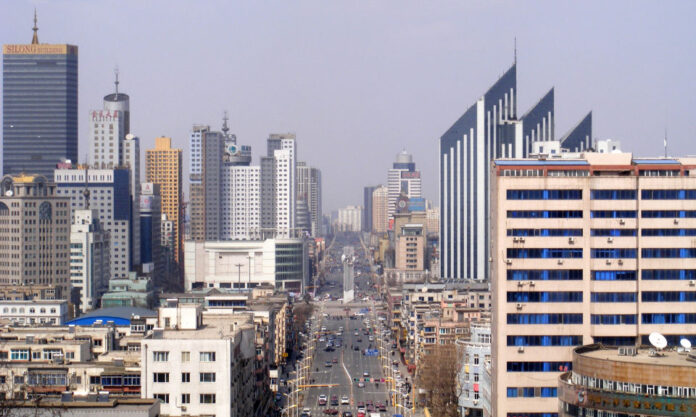



Steel is still the word most often put beside Anshan, and with reason. Ninety kilometres south of Shenyang, this Liaoning city of more than three million people grew around iron, mills, mountains, jade and hot spring water.
钢铁仍然是人们提到鞍山时最先想到的词,而且并非没有道理。这座辽宁城市位于沈阳以南约90公里,人口超过300万,围绕铁矿、钢厂、山地、玉石和温泉水发展起来。
The name means “saddle mountain”, after a nearby hill visible from the railway approach. The municipality covers about 9,270 square kilometres, taking in the urban districts, Haicheng, Tai’an County and Xiuyan Manchu Autonomous County.
“鞍山”之名来自附近一座形似马鞍的山,坐火车进城时仍可看到这一地形提示。全市面积约9,270平方公里,下辖城区、海城、台安以及岫岩满族自治县。
Anshan’s industrial story is older than the People’s Republic. Steel works were established here under Japanese control in 1916, badly damaged after the war, and rebuilt after 1948 as one of the early PRC’s major heavy-industry bases.
鞍山的工业故事早于新中国。1916年,日本控制下的钢铁企业在这里建立;战后设施一度严重受损,1948年以后重新建设,成为新中国早期重要的重工业基地之一。
Steel Works and Thousand Peaks
钢厂与千山
Angang, or Ansteel, mattered because it was not only large. In the 1950s, Soviet-assisted projects at Anshan included a seamless-pipe factory, a large rolling mill and Blast Furnace No. 7, making the city part of the hardware of national reconstruction.
鞍钢的重要性不只在于规模。20世纪50年代,苏联援助下的鞍山项目包括无缝钢管厂、大型轧钢厂和七号高炉,使这座城市直接进入国家工业重建的核心叙事。
The Ansteel Museum is the most useful place to start if time is short. It gives the steel story a physical scale that adjectives cannot: plant models, old photographs, workers’ equipment and the machinery of an industry that once organised much of the city’s daily life.
如果时间有限,鞍钢博物馆是理解鞍山最直接的起点。厂区模型、老照片、工人用具和大型设备,比形容词更能说明钢铁曾经如何组织这座城市的日常生活。
Qianshan, southeast of the urban area, is the other essential Anshan. The national-level scenic area covers about 72 square kilometres and is commonly described through its 999 granite peaks, a number chosen because 1,000 would be too complete.
位于市区东南的千山,是认识鞍山的另一端。这个国家级风景名胜区面积约72平方公里,常以999座花岗岩峰来说明其山势;数字停在999,是因为1000反而太满。
Its temples and monasteries bring Buddhism and Taoism into the same landscape, while Xianrentai, at about 708 metres, is usually treated as the highest and most rewarding point. Qianshan is close enough for a day trip, but not small enough for a perfunctory one.
山中的寺庙和道观让佛教、道教共享同一片山地,其中海拔约708米的仙人台通常被视为最高、也最值得登临的去处。千山离市区不远,却并不适合草草看过。
Jade, Hot Springs and the Route In
玉、温泉与抵达方式
The Jade Buddha Garden sits near 219 Park in the city proper. Its main draw is the large jade Buddha carved from a single piece of Xiuyan jade, the stone for which came from one of Anshan’s own counties.
玉佛苑位于市区二一九公园附近,最主要的看点是由整块岫岩玉雕成的大型玉佛。玉料来自鞍山所辖的岫岩,也让这处景点与本地资源发生了直接关系。
Xiuyan is important in its own right. The county is widely associated with Chinese jade production, so the Jade Buddha is not simply a temple object imported into the city, but part of a local mineral economy and craft tradition.
岫岩本身也值得一提。它长期与中国玉石生产相联系,因此玉佛并不只是被放进城市的一件宗教造像,而是与本地矿产、工艺和地方身份相连。
Tanggangzi Hot Spring, south of the centre, has a longer pedigree than many visitors expect. Local accounts trace its use back more than 1,000 years, and it has been counted among China’s better-known therapeutic spring resorts.
市区以南的汤岗子温泉,比许多游客想象得更有来历。地方资料常把它的使用历史追溯到千年以上,它也长期被列入中国较有名的疗养温泉之中。
Food is another practical reason not to rush away. Haicheng stuffed pie is the best-known local name, usually made as a pan-fried pastry with a meat filling; barbecue, cold dishes and dumplings cover the rest of a northern evening well enough.
吃饭也是不必急着离开的理由。海城馅饼是最有辨识度的本地名字,一般是带肉馅的煎烙面食;烧烤、凉菜和饺子,则足够支撑一个东北夜晚。
Transport is straightforward. High-speed trains run from Shenyang to Anshan West in roughly half an hour, while Anshan Station is more convenient for the old centre, 219 Park and the Jade Buddha Garden.
交通并不复杂。沈阳至鞍山西的高铁约半小时可达;若前往老城区、二一九公园或玉佛苑,市区内的鞍山站通常更方便。
For air travel, Shenyang Taoxian International Airport is the main gateway; Anshan Teng’ao Airport is closer but has fewer routes. A sensible visit gives Qianshan a full day, then uses the museum, jade garden and hot spring as the city pieces around it.
乘飞机前来,多数旅客仍会选择沈阳桃仙国际机场;鞍山腾鳌机场距离更近,但航线较少。比较稳妥的安排,是把千山留出一整天,再用博物馆、玉佛苑和温泉补足城市部分。