



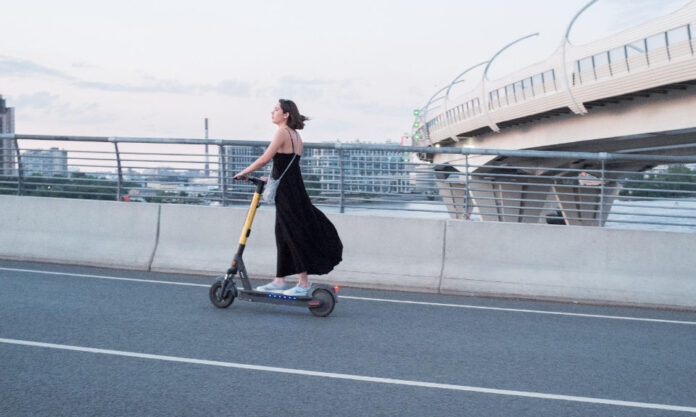



Nanjing, the city I have called home from home for the last 11 years is the place where I learned to do something I swore staunchly never to do – ride an e-bike. Now, this daily transportation adventure is something that I swear staunchly as I do.
南京,在过去的11年里,我称之为家的城市,是我学会做我发誓永远不会做的事情的地方——骑电动自行车。 现在,这种日常的交通冒险是我坚定地发誓的。
For the first half-decade in The Southern Capital, I drove a car. It’s safer, I reasoned; four wheels is always better than two. Yet after buying back all of my driver’s license points for six years in a row, endless traffic jams, and one too many close calls, I got down off my high horse and up onto my e-bike. And I have never looked back.
在南方首都的前半年里,我开了一辆车。 我推理道,这更安全;四个轮子总是比两个轮子好。 然而,在连续六年买回我所有的驾照积分后,无休止的交通堵塞,以及太多次接近的电话后,我从高马背上下来,骑上电动自行车。 我从未回头过。
Because that’s part of the rules of riding an e-bike. Never look back, or sideways, or even ahead of you. If you’re a pro, you may even have a mobile phone holder attached to the front so that you can watch your favourite videos as you drive. But I am getting ahead of myself.
因为那是骑电动自行车规则的一部分。 永远不要回头看,也不要侧身看,甚至不要往前看。 如果您是专业人士,您甚至可以在前面安装一个手机支架,这样您就可以在开车时观看您最喜欢的视频。 但我超前了。
The nature of the typical Nanjinger’s relationship with the e-bike is quintessentially love/hate. I love mine when I need to get anywhere in a hurry. It’s outside my front door, the bike lanes are a respite and protection from larger motor vehicles out on the main roads, and with a little ingenuity, there isn’t much you can’t fit on there.
典型的南京人与电动自行车的关系本质上是爱恨交加。 当我急着去任何地方时,我喜欢我的。 它在我的前门外,自行车道是避风和保护主要道路上大型机动车的避风和保护,如果有一点聪明才智,没有什么你放不下的。
It takes my guitar, amplifier and mic stand- simultaneously. I’ve transported bamboo plants, sausage machines, dogs. You name it; one of us has probably seen someone carrying it on their trusty, two-wheeled steed, or engaged in doing so ourselves. Be honest; what is the most outlandish item you have managed to wedge onto your e-bike?
它同时需要我的吉他、放大器和麦克风支架。 我运送过竹子植物、香肠机和狗。 你的名字;我们中的一个人可能见过有人用他们值得信赖的两轮駿韧载着它,或者我们自己也参与了。 老实说;你设法把最离奇的物品塞进你的电动自行车上是什么?
But it’s not all smooth sailing; I also hate e-bikes at times. The times they beep too loudly and startle me, or when their alarms start wailing like a Banshee because somebody looked at them funny, when they run out of battery for no explicable reason and you have to propel them home with your feet, enduring the unpitying stares of passers-by. When people spit off them, sending projectiles of biohazard into the street. The time one swerved into me going the wrong way across a busy 6-lane intersection, upending my e-bike and myself onto the tarmac before disappearing into the oncoming traffic…
但并非一帆风顺;有时我也讨厌电动自行车。 有时他们发出太大的哔哔声,吓了我一跳,或者当他们的警报开始像女妖一样哭泣时,因为有人看着他们好笑,当他们无缘无故地没电了,你必须用脚把他们推回家,忍受路人无怜的凝视。 当人们吐出它们时,将生物危害的弹丸送入街道。 有一次,有人转向我走错路,穿过一个繁忙的6车道十字路口,把我的电动自行车和我自己撞倒在停机坪上,然后消失在迎面而来的车辆中……
Ahhh, memories.
啊,回忆。
Love them or hate them, the rise of e-bikes has transformed the landscape of urban life in The Middle Kingdom. Some of my veteran ex-pat friends here have shown me photos of Xinjiekou car-free, e-bike free, with just a spattering of bicycles blithely wheeling around the roundabout.
无论爱他们还是恨他们,电动自行车的兴起改变了中王国的城市生活格局。 我在这里的一些资深外籍朋友给我看了新街口没有汽车、没有电动自行车的照片,只有一团飞溅的自行车在回旋处转。
That was over 20 years ago, when e-bike sales were modest. In “the world’s most spectacular growth”, according to Wikipedia, e-bike sales skyrocketed from 56,000 in 1998 to 21 million in 2008 (Weinert et al, 2006). This surge in popularity was driven, in part, by the need to reduce air pollution, and concurrent bans and restrictions on fossil fuel powered bikes. For this, we are all grateful.
那是20多年前的事了,当时电动自行车的销量不大。 根据维基百科,在“世界上最壮观的增长”中,电动自行车的销量从1998年的56,000辆飙升到2008年的2100万辆(Weinert等人,2006年)。 这种人气的激增部分是由于需要减少空气污染,以及同时禁止和限制化石燃料驱动的自行车。 对此,我们都很感激。
Another reason for the big love for e-bikes was probably the continued influx of workers from rural areas to urban centres, where the battery powered bicycles proved an accessible form of independent, autonomous transport, promising quicker commutes, reduced carbon footprints, and the freedom of the city. This low(er) cost mode of transport creates an equitable means to get to work, to study, or wherever it is that the vast populace of our city wishes to be.
对电动自行车的热爱的另一个原因可能是工人从农村地区不断涌入城市中心,在那里,电池供电的自行车被证明是一种可获得的独立、自主运输形式,承诺更快的通勤、减少碳足迹和城市自由。 这种低成本的交通方式为上班、学习或我们城市广大人口希望去的地方创造了一种公平的手段。
And believe me, we do see them everywhere; at the top of mountains, zooming down the highway, beside hammocks and tents by peaceful lakes and duck ponds.
相信我,我们确实到处都能看到它们;在山顶,沿着高速公路,在宁静的湖泊和鸭子池塘旁的吊床和帐篷旁边。
If there is a will, there is a way when it comes to finagling your e-bike into all and any place that may strike your fancy. E-bikes significantly enhance urban mobility. Along with the metro and public bus services, e-bikes make the city our oyster.
如果有意愿,就有办法把你的电动自行车带入所有可能吸引你眼球的地方。 电动自行车大大增强了城市流动性。 加上地铁和公共巴士服务,电动自行车使这座城市成为我们的牡蛎。
Unlike the metro, and buses however, e-bikes do tend to pose unique challenges in terms of safety and well being on the roads. Rules often feel more like suggestions. You won’t see a bus snaking down the sidewalk at full pelt, or the metro cutting across three other metro lines because there are no foreseeable other metros in sight. E-bikes, or their drivers, rather, tend towards the cheeky, if not the blatantly irresponsible at times.
然而,与地铁和公共汽车不同,电动自行车确实在道路上的安全和福祉方面往往会带来独特的挑战。 规则往往感觉更像是建议。 你不会看到公共汽车满身在人行道上爬行,也不会看到地铁穿过其他三条地铁线,因为看不到其他地铁。 相反,电动自行车或其司机往往倾向于厚脸皮,如果不是公然不负责任的话。
But the seasoned e-bike rider readers know that manoeuvring around the city on two wheels is an exercise in Zen, a surrender to the universe and submission to the flow, if ever there was one.
但经验丰富的电动自行车骑手读者知道,骑着两个轮子在城市里转来转去是禅宗的练习,是对宇宙的投降和顺流,如果有的话。
Upon merging with the beautiful chaos that is urban traffic, one joins a cosmic dance of ebb and flow, give and take, and hope for the best. Knowing when to stop, when to go becomes instinctual, rather than mandated by any external signs or symbols. Wu Wei, the Daoist concept of non-action, or effortless action, is definitely applicable whilst captaining your e-bike; movement becomes an exercise in harmony, presence and simplicity.
当与城市交通的美丽混乱融合在一起时,人们加入了潮流的宇宙舞蹈,给予和接受,并希望得到最好的。 知道何时停止,何时离开成为本能,而不是由任何外部标志或符号所授权。 Wu Wei,道教的非动作或毫不费力的动作概念,在驾驶电动自行车时绝对适用;运动成为和谐、存在和简单的练习。
I may not understand how and why it works, but it does. The rules are bespoke, each day is a new adventure.
我可能不明白它是如何以及为什么起作用的,但它确实如此。 规则是定制的,每一天都是新的冒险。
And one thing’s for sure. Love them or hate them, e-bikes have become a stalwart part of the Nanjing urban sphere. Whether you’re swearing by them, swearing at them, or swearing on them, zen and the art of e-biking is here to stay.
有一点是肯定的。 无论爱与否,电动自行车已经成为南京城市圈的坚定部分。 无论你是对他们发誓,对他们发誓,还是对他们发誓,禅宗和电动自行车艺术都会在这里停留。