





It’s a big deal, if you’re a train nerd. But then, if you’re in government procurement, it’s a big deal. And if you’re developing a nation’s transportation infrastructure, it’s a big deal. And in terms of the rivalry between China and Japan to roll out high-speed trains for Asia…
如果你是一个火车迷,这很重要。但如果你参与政府采购,那就很重要了。如果你正在开发一个国家的交通基础设施,那么这是一件大事。至于中国和日本之间为亚洲推出高铁的竞争……
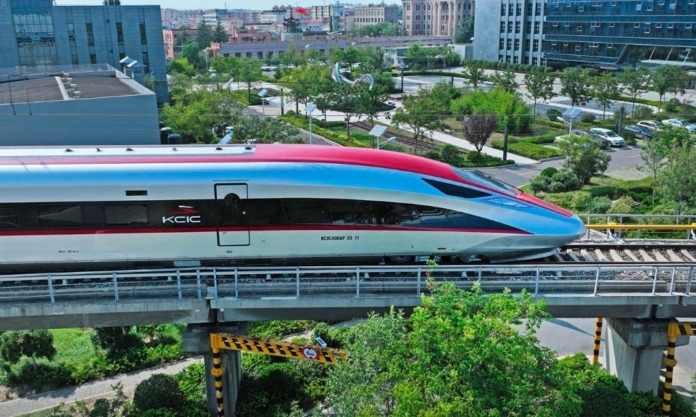
It’a big deal. On 5 August, China’s rolling stock manufacturer, CRRC Qingdao Sifang, revealed its first completed high-speed-train set for export. Destination Indonesia.
这是一件大事。 8月5日,中国机车车辆制造商中车青岛四方股份公司发布首套出口高速动车组成品。目的地印度尼西亚。
Let that sink in. The same triumph of technology which whisks us around like lightning and makes China the envy of the world is set to be taking to the rails elsewhere.
让我们记住这一点。同样的技术胜利将像闪电一样带我们四处走动,让中国为世界所羡慕,但它也将在其他地方走上正轨。
Specifically, the CR400AF Fuxing train is among those that will run on the 142.3 kilometre route between Indonesia’s two largest cities of Jakarta and Bandung on the island of Java.
具体来说,CR400AF“复兴号”列车将在印度尼西亚最大的两个城市雅加达和爪哇岛万隆之间的142.3公里路线上运行。
Construction on the line is expected to be complete by the year’s end, while the first China-made, high-speed trains should begin carrying passengers in the summer of 2023.
该线路的建设预计将于今年年底完成,首列中国制造的高速列车将于 2023 年夏季开始载客。
But how did we get to this point today, and how did Japan fit in?
但我们是如何走到今天这一步的,日本又是如何融入其中的呢?
Beginning in 2008, Japan had ambitions to export its Shinkansen high-speed trains and their associated technology to Indonesia. They were fully expected to win the bid too, until China stepped in at the last minute, with a rival, more fiscally-attractive offer.
从 2008 年开始,日本就有向印度尼西亚出口新干线高速列车及其相关技术的雄心。人们完全预计他们也会赢得申办,直到中国在最后一刻介入,提出了一个更具竞争力的、更具财政吸引力的报价。
Indonesia awarded the project to China in September of 2015. To say Japan was furious is putting it mildly.
印度尼西亚于 2015 年 9 月将该项目授予中国。说日本感到愤怒还算温和。
In the geo-political scheme of things, the decision to go with China at the end of the day came down to money. For the Indonesian Government was not willing to provide any funding for the project.
从地缘政治的角度来看,最终与中国合作的决定归结为金钱。因为印度尼西亚政府不愿意为该项目提供任何资金。
As The Diplomat reported at at the time, “Japan’s bid was based on getting funding from Indonesia’s government and a low-interest loan offered by Japan; China offered to provide a loan and have Indonesian state-owned firms provide the remainder of the costs”.
正如《外交官》当时报道的那样,“日本的投标是基于从印度尼西亚政府获得资金以及日本提供的低息贷款;中国提出提供贷款,并让印度尼西亚国有企业提供剩余费用”。
Back to the nice new train itself, where that business model is reflected in its branding. On the slick exterior, the letters KCIC; Kereta Cepat Indonesia China that is the conglomerate’s joint venture with China.
回到漂亮的新火车本身,这种商业模式反映在它的品牌中。光滑的外表上刻有 KCIC 字母; Kereta Cepat Indonesia China是该集团与中国的合资企业。
Inside, while not dissimilar to the trains we all know and love here in the Middle Kingdom, Indonesians shall instead be reclining on grey and black seating, in a brown and cream panelled cabin.
在里面,虽然与我们在中国所熟知和喜爱的火车没有什么不同,但印度尼西亚人将斜倚在棕色和奶油色镶板车厢内的灰色和黑色座椅上。
With a maximum speed of 350 kilometres per hour, the fastest journey time on the route is expected to be a mere 36 minutes. That’s going to be a huge transformation for many Indonesians. Railway Gazette reports the current train takes 3 hours on a narrow-gauge line.
最高时速350公里,预计最快行驶时间仅需36分钟。对于许多印度尼西亚人来说,这将是一个巨大的转变。 《铁路公报》报道称,目前的火车在窄轨线上运行需要 3 个小时。
As a symbol, the unveiling of China’s first high-speed train for export is indeed a big deal, one that is sure to have now refocused the attention of other governments across Asia. If Indonesia can have a high-speed railway at no cost to them, why can’t others?
作为一个象征,中国第一列出口高铁的亮相确实是一件大事,现在肯定会重新引起亚洲其他国家政府的关注。如果印度尼西亚可以免费拥有高铁,为什么其他国家不能呢?