Suguo is one of Nanjing’s finest success stories. Starting off as a little fruit shop (the name literally means Jiangsu Fruit), the local business has grown into a giant, becoming a shopping store chain that spans several provinces with over 2,000 stores and and a workforce of more than 50,000. There are big Suguos, baby Suguos, 24 hour Suguos and now there is its latest incarnation; “Life’s So Good with SG”, a high end convenience store with an emphasis on imported products (everything from liquor to coffee to shavers) as well as local everyday items such as milk. Four such stores are at present to be found in Nanjing; the other three at 178 Zhongshan Lu (beside the Renming High School), Guyi Lang (off Changjiang Lu) and 148 Lushan Lu.
Author: admin6
-

Tradition
Tradition is a new boulangerie that specializes in a variety of baked treats. In addition to baguettes, macarons, and souffl
-
Nature Enjoy
With the mission to promote healthy chemical free eating, Nature Enjoy is Nanjing’s organic experience store that combines an organic and GAP (Good Natural Product) shop and restaurant. On the shop front, shelves are stocked with an array of raisins, tea, honey, sunflower seed oil, olive oil, black soybean oil, rice, flour and oatmeal, all largely sourced from China. From the kitchen comes rolls, bread, muffins, cookies, scones, croissants along with larger, made-to-order dishes. Preparation time is key, so orders should be placed 24 hours in advance. As for the experience side of things, Nature Enjoy’s British Director of Food (fantastic title!) Robert offers classes (up to five people) in hands-on training for organic food preparation.
-
BHG Market
A new supermarket in Nanjing, which is located at the -2F (second floor of the basement) of Nanjing Aqua City, it`s more like a grocery than a supermarket, supplying over 20,000 different kinds of goods, and a small collection of quality imports, Japan, France, Korea.
BHG has an elegant shopping space with great services too, English signs and labels, if you have any question you can go to the service desk the staff where there are staff available to speak in English. What makes BHG special is they have many kinds of fresh organic fruits and vegetables, and even though it’s pricy but really good for health. And the wine cellar is another feature of BHG, with imported beers, liquer, and red wines. There is always one kind you will like.
-
Metro Supermarket
A complete supermarket with everything from vegetables to computers. Metro probably offers Nanjing’s largest selection of imported foreign foods under one roof. Including a bakery with cheese cakes and foreign style bread, desserts and pastries.
The one drawback of Metro is that you must register for a “Metro Card” in order to purchase goods. However for business owners in Nanjing this can be quite useful as upon check-out you are issued an automatic “fa-piao” under your company’s name.
Another slightly smaller branch is located in Xiaguan District off Jianning Lu, near the former Nanjing West Railway station and at the base of the tourist attraction “yuejianglou”.
-
Times Grocery Store
All but hidden in an unassuming part of Yunnan Lu, this is a treasure trove for those craving the simple tastes of back home.
For those of you who are yearning for such food, but can’t face the commercial nature of Carrefour, Walmart et al, here’s a great local option.
This modest little two-storey foreign grocery store has a surprisingly great range of stuff…there’s beers, wines, spirits, breads, cakes, cereals, spreads (they even sometimes have Vegemite!!!), cheeses, canned foods and sweets. There’s ingredients for cakes, as well as Indian, Italian and Mexican food.
It’s certainly on the more expensive side, but hey, when your tastebuds get nostalgic, sometimes money just isn’t an issue.
-
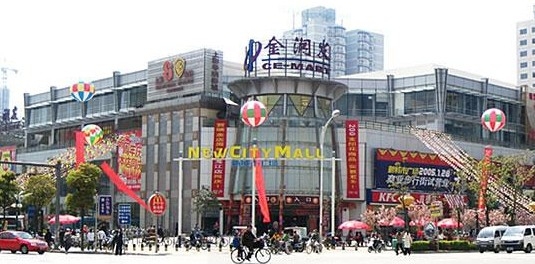
CE Mart/RT Mart
CE Mart/RT Mart is basically the Chinese version of Carrefour or Walmart. It offers almost the same selection of goods and a similar set up. One section of the store contains everything from TV’s and stereos to cleaning supplies and housewares, while another section sells fresh produce, meat, fish, milk, and packaged goods. Imported goods are also available, though the selection leaves something to be desired. Additionally, CE Mart/RT Mart is usually located above a mini-mall which sells everything from medicine to clothes.
There are various locations of this shop throughout the city. Some include next to the New City Mall on #95 Caochangmen Street (?????95?), and another branch located a short walk away from Nanjing University on #39 Danfeng Street (???39?).
-
BASF opens water treatment facility in Nanjing
The close of 2012 saw BASF begin production of chemicals for water treatment and paper manufacturing at the Nanjing Chemical Industry Park in Nanjing. These wholly-owned, world-scale production plants for quaternized cationic monomers (DMA3Q) and cationic polyacrylamide (cPAM) further strengthen BASF’s leading position in supporting the water treatment and paper industries in Asia.
-
Voluntary efforts continue to defy Massacre intent
Built in 1985, extended and renovated in 1995 and occupying some 28,000 square metres, the Nanjing Massacre Memorial Hall is a sprawling edifice of a museum that is impressive by anyone’s standards. Nevertheless, the Memorial and all that it represents, would not function as it does were it not for many whose efforts over the last 75 years have sought absolution to the memories of 1937’s atrocities.
John Rabe may be the best known example of exemplary volunteer behaviour through his actions to help establish the Nanking Safety Zone that is estimated to have saved the lives of up to 200,000 Chinese civilians.
His efforts have never been forgotten by the people of Nanjing. Upon returning to Germany in 1938, he continued campaigning to stop any further inhumane violence; actions that were to lead to his detention and interrogation by the Gestapo. Following the war he continued sporadic work for Siemens, but the Massacre would forever haunt him. Both the British army and the People’s Commissariat for Internal Affairs of Russia arrested Rabe, releasing him only after intense interrogation. Stripped of the work permit issued to him by the British Zone of occupied Berlin, Rabe had little choice but to undergo de-nazification to have any chance at reemployment.
Still unable to find work and on the verge of starvation, from 1946 to 1948 the Rabe family lived in a one room apartment and survived by eating wild seeds and whenever possible selling their modest collection of Chinese art. Upon learning of their dire straits, the people of Nanjing raised the equivalent of ¥120,000 in today’s money that was personally delivered to the Rabes by the mayor of Nanjing himself. For the following year, the people of Nanjing were to send a food package to the Rabe family each and every month.
Such selfless acts can be seen to this day among Nanjing’s good Samaritans. For the past 18 years, more than 400 students of Nanjing Xiaozhuang College have donated their efforts to the Volunteer Tour Guide Service at the Memorial Hall. By giving up their holiday time, between them they have shown more than 2.5 million visitors around the exhibition area.
It is job that is taken most seriously, and for which there is no shortage of applicants. To be an official member of the Volunteer Tour Guide Service requires interview, training and trial lectures. Successful applicants will stand in front of the mirror in their dormitory, exercising the lecture again and again, followed by copious note swapping and discussion. They learn from each other and strive hard for perfection.
Today, the easiest way to visit the Massacre Memorial is by metro. It was not the case in 2008, prior to the opening of line 2 when the volunteer students of Xiaozhuang College had their campus in Jiangning District. Come rain or shine, the group of approximately 20 students would each year make the long twice-daily journey to their work. Even during the Memorial’s renovation, the students would donate more of their time, collecting 12,802 human archives and organizing a database of victims.
Volunteers at the Nanjing Massacre Memorial Hall are not limited to those from local colleges and universities, but they do share a deep understanding of the subtle meanings that are built into each and every corner of the museum; nuggets of information that they are only too happy to share with those who are willing to listen. An American volunteer working at the Memorial comments, “The statuary and landscaping outdoors are interesting and worth reflection. For example, the gates to the memorial open to an expansive field of stones divided by a two dark stone sidewalks. Even many Chinese learners might not realize that the sidewalks make the Chinese character ‘ren’ or ‘person’. Every statue, every step and every tree carries meaning.”
-
Lu Chuan’s journey to Hell
In the 75 years since the Nanjing Massacre there have been many attempts to document and tell its tale via the creative medium of motion picture making. Some were pure propaganda, others naive and some downright trite. One stands head and shoulders above all; director Lu Chuan’s “Nanjing, Nanjing! City of Life and Death”.
Hailing from Xinjiang, filmmaker and screenwriter Lu Chuan was born in 1971 and was educated at the People’s Liberation Army International Relations University in Nanjing. After studying a masters degree in directing at the Beijing Film Academy, his first two films, “The Missing Gun” (2002) and “Kekexili: Mountain Patrol” (2004) achieved much critical acclaim both at home and abroad, despite being small-budget productions.
Lu had been nursing the idea for his third film since 2003, but upon is release in 2009 no amount of preparation would have readied him for what was about to unfold. For within the first week of the film’s release, death threats began to arrive.
The controversy was aroused by the film’s sympathetic portrayal of a Japanese soldier; Lu cast Hideo Nakaizumi as Kadokawa, a Japanese haunted by his inability to stop the slaughter ordered by his superior officers.